Meal Prep for Beginners: A Simple Weekly System
Meal Prep for Beginners: A Simple Weekly System
If the words "meal prep" make you picture a fridge stacked with a dozen identical containers, take a breath. It does not have to be that intense, and you definitely do not have to be a professional cook to make it work. Meal prep is simply the habit of doing a little cooking ahead of time so that future-you has good food ready to go. That is it.
The secret that keeps people going is not willpower or fancy gadgets. It is having a repeatable system you can run on autopilot every week. Once the steps become routine, prep stops feeling like a chore and starts feeling like a gift you give yourself. Let's build that system together, one friendly step at a time.
Why a System Beats Willpower
Most beginners quit meal prep because they treat every week like a brand-new puzzle. They stare into the fridge, feel overwhelmed, and order takeout instead. A system removes that decision fatigue. When you always prep on the same day, shop from the same kind of list, and cook the same flexible building blocks, your brain can relax. You are no longer inventing dinner from scratch every night.
Think of it like brushing your teeth. You do not agonize over whether to do it or how. You just do it because it is a routine. That is exactly what we are aiming for with food.
The Simple Weekly System
Here is the whole system in seven repeatable steps. Read it once, then run it every week. It gets faster each time.
- Pick your prep day. Choose one day and roughly one to two hours that you can protect. Sunday afternoon is popular, but any day works. Put it on your calendar like an appointment.
- Plan a few meals. You do not need seven unique dinners. Aim for three or four meals you can rotate and mix. Beginners do best keeping it small and winning, not sprawling and quitting.
- Write a focused shopping list. Organize it by store section so you are not backtracking. Include your proteins, grains, vegetables, sauces, and a couple of fresh items for the back half of the week.
- Shop with purpose. Get in, get your list, get out. If you shop online for pickup, save your list as a reusable template so next week takes two minutes.
- Batch-cook your building blocks. This is the heart of the session: cook a big batch of protein, a big batch of grain, and a tray or two of vegetables. More on this below.
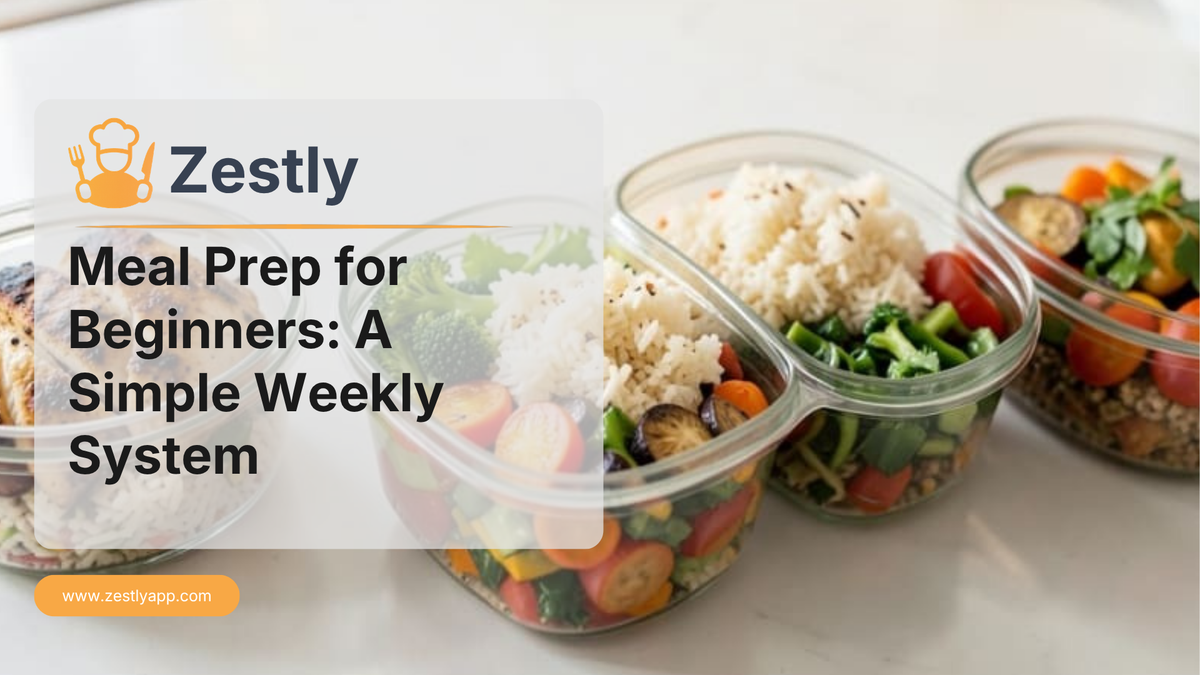
- Portion and store. Cool everything, then pack it into containers so it is grab-and-go all week.
- Assemble as you go. Instead of pre-building every single meal, keep components separate and combine them fresh into bowls. This keeps food from getting boring or soggy.
That is the entire loop. Pick a day, plan, shop, batch, store, assemble, repeat.
Batch-Cooking Your Building Blocks
The magic of this approach is that you are not cooking finished meals, you are cooking flexible components. Prep a few of each category and you can remix them into dozens of different plates.
- Proteins: Roast a tray of chicken thighs, bake a block of tofu, brown some ground turkey, or simmer a pot of beans or lentils. Season them simply so they play well with any cuisine.
- Grains and starches: Cook a big pot of brown rice or fluffy quinoa, or roast some potatoes. These reheat beautifully and form the base of most bowls.
- Vegetables: Roast whatever is in season on sheet pans, drizzled with a little olive oil, salt, and pepper. Keep some raw crunchy veg on hand too, like cucumbers, peppers, and shredded cabbage.
- Sauces and toppings: A good sauce turns plain components into a real meal. Stock a couple: a lemon-tahini drizzle, a soy-ginger sauce, a quick vinaigrette, plus toppings like nuts, seeds, or crumbled cheese.
When you shop and cook in these categories, you are building a personal salad bar in your fridge.
Building Mix-and-Match Bowls
Once your components are ready, dinner becomes a two-minute assembly job. The formula is easy to remember: base + protein + veg + sauce + topping. Start with a scoop of grain, add your protein, pile on roasted and raw vegetables, spoon over a sauce, and finish with something crunchy.
Because the parts are neutral, you can send the same ingredients in totally different directions all week. Monday's brown rice, chicken, and roasted veg becomes a Mediterranean-leaning plate; the same base with a spicy-sweet glaze becomes something entirely new. If you want inspiration for turning components into finished dishes, try a hearty Farro and Roasted Vegetable Grain Bowl, a cozy batch of Mediterranean Stuffed Bell Peppers, or a punchy Crispy Gochujang Tofu Rice Bowl. Each one shows how the same humble building blocks can feel exciting on the plate.
Storage and Shelf Life
Good storage is what keeps your hard work safe and appetizing. A few beginner-friendly rules go a long way.
Cool cooked food before you seal and refrigerate it, and get it into the fridge within about two hours of cooking. Most cooked proteins, grains, and roasted vegetables keep well for three to four days in the refrigerator, which is exactly why we plan a few fresh items for the tail end of the week. When in doubt about how long something is safe to keep, check a trusted reference like FoodSafety.gov rather than guessing.
Store components separately when you can, and keep sauces in small jars so nothing turns to mush before you eat it. Label containers with the date if you are forgetful; it removes all the sniff-test anxiety later.
Avoiding Burnout
The number one reason beginners give up is eating the exact same meal five days in a row. Variety is not a luxury here, it is what keeps the habit alive. Rotating your sauces and toppings is the cheapest way to make identical components taste brand new.
Be kind to yourself, too. Some weeks you will only prep two components instead of five, and that is still a win. If a full session feels like too much, prep just a grain and a protein and let takeout or eggs fill the gaps. Meal prep is a spectrum, not a pass-or-fail test.
Finally, remember why you started: fewer stressful "what's for dinner" moments, a little money saved, and meals that actually make you feel good. Keep the system small, keep it repeatable, and let it grow only as your confidence does. You have got this.
Frequently Asked Questions
How long does meal-prepped food last in the fridge?
Most cooked proteins, grains, and roasted vegetables stay safe and tasty for three to four days when refrigerated. Cool food before storing and get it into the fridge within about two hours of cooking. Plan a couple of fresh ingredients for the later part of the week so nothing has to sit too long. When unsure, check a trusted source like FoodSafety.gov.
What are the best containers for meal prep?
Airtight containers with tight-fitting lids are ideal. Glass containers resist stains and odors, go from fridge to microwave safely, and let you see what's inside, though they are heavier. BPA-free plastic is lighter and cheaper. For mix-and-match bowls, keep small separate jars for sauces so components stay fresh and don't get soggy.
Can I freeze meal-prepped food?
Yes, freezing is great for extending shelf life beyond a few days. Cooked grains, beans, soups, stews, and most proteins freeze well for two to three months. Roasted vegetables and crunchy raw veg tend to get watery, so freeze those less often. Cool food completely, portion it, label with the date, and thaw in the fridge overnight before reheating.
How do I keep meal prep from getting boring?
Cook neutral building blocks and remix them instead of committing to one finished meal. Rotating sauces and toppings is the easiest trick: the same rice, protein, and veg can taste Mediterranean one day and spicy-sweet the next. Vary your grains and proteins week to week, and give yourself permission to prep fewer components on busy weeks.

Written by
Matthew Weitzman
Founder, Zestly
Matthew Weitzman is the founder of Zestly, on a mission to make everyday cooking easier and more joyful. A lifelong home cook, he writes about practical techniques, smart ingredient choices, and building confidence in the kitchen.
View all posts →