A great meal rarely starts at the grocery store. More often, it starts with a cabinet that already has what you need. When your pantry is stocked with the right basics, a bare fridge stops feeling like a problem and starts feeling like a challenge you can actually win.
The goal here is not to fill every shelf. It is to keep a small, hardworking set of ingredients that combine into hundreds of meals. Below are the ten staples we think every home cook should have within arm's reach, why each one earns its spot, and a few fast ways to put it to work tonight.
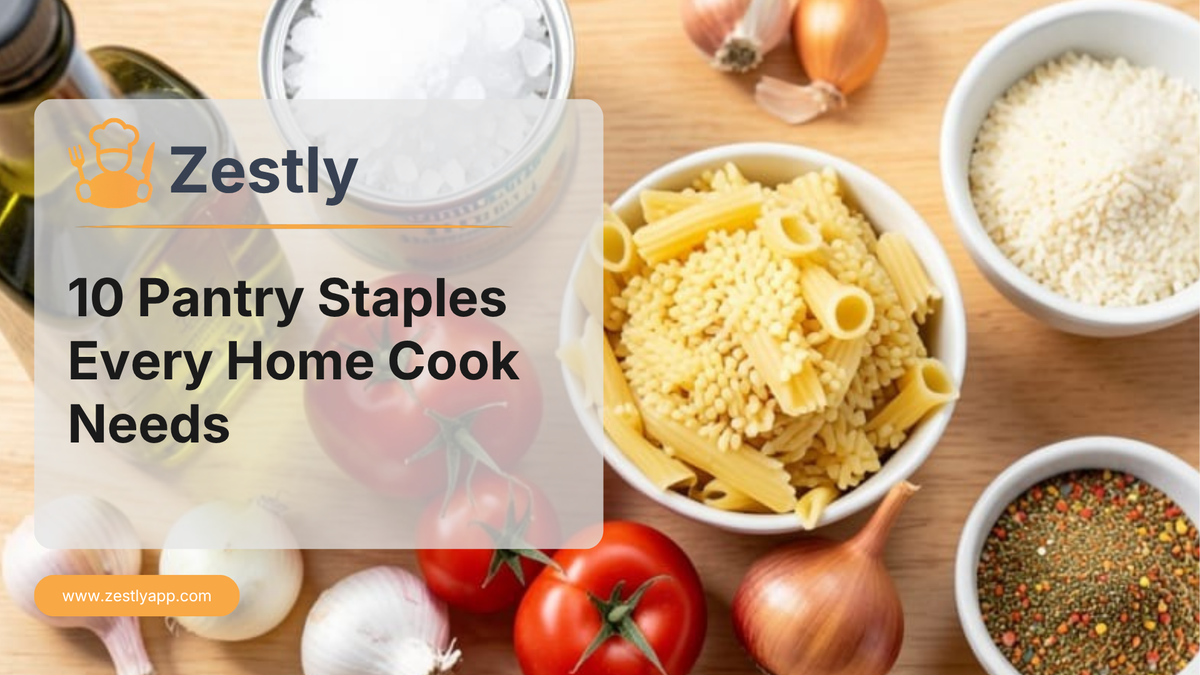
The 10 Pantry Staples
- Olive oil
- Kosher salt
- Black pepper
- Garlic
- Onions
- Canned tomatoes
- Canned beans
- Dried pasta
- Rice
- Stock or broth
Let's walk through each one.
1. Olive Oil
If you buy one fat for cooking, make it olive oil. It is the backbone of countless dishes, doing everything from searing vegetables to finishing a bowl of soup with a glossy drizzle. A mid-range bottle is fine for cooking, and a nicer extra-virgin bottle is worth keeping for salads and dipping.
Quick uses: whisk it with lemon and salt for an instant dressing, toss it with roasting vegetables, or warm it gently with garlic for a five-minute pasta sauce.
2. Kosher Salt
Salt is the single most important seasoning in your kitchen, and kosher salt is the easiest to control. Its larger flakes are simple to pinch and sprinkle, which means you season by feel instead of guesswork. Salt does not just make food taste salty. It sharpens and balances every other flavor on the plate.
Quick uses: salt your pasta water generously, season meat before it hits the pan, and add a pinch to sweet dishes to make them taste more vivid.
3. Black Pepper
Freshly cracked black pepper brings warmth and a gentle bite that pre-ground pepper simply cannot match. Buy whole peppercorns and a grinder, and you will notice the difference in the very first dish.
Quick uses: finish eggs, pasta, and roasted vegetables with a few grinds, or lean into it for a peppery pan sauce.
4. Garlic
Few ingredients add as much depth for as little effort as garlic. A single clove, minced and sizzled in oil, can transform a plain dish into something that smells like a restaurant kitchen. Keep a head or two on the counter and you will always have a flavor base ready to go.
Quick uses: bloom minced garlic in olive oil before adding vegetables, roast whole heads until sweet and spreadable, or grate it raw into dressings for a sharper punch.
5. Onions
Onions are the quiet workhorse behind soups, stews, sauces, and stir-fries. Cooked low and slow they turn sweet and jammy. Cooked hot and fast they add savory backbone. Either way, they are the foundation most recipes are secretly built on.
Quick uses: start almost any braise or soup with diced onion, caramelize a batch for burgers and sandwiches, or slice thin and pickle them for a bright topping.
6. Canned Tomatoes
A few tins of canned tomatoes are a pantry insurance policy. They are picked and packed at peak ripeness, which often makes them better than the sad off-season tomatoes at the store. With a can of tomatoes and a couple of the staples above, dinner is basically done.
Quick uses: simmer with garlic and olive oil for a fast marinara, build a shakshuka for breakfast-for-dinner, or stir into rice and beans for a one-pot meal.
7. Canned Beans
Canned beans are cheap, filling, and packed with protein and fiber. They turn a side dish into a full meal and stretch your grocery budget without much effort. Keep a few varieties on hand and you are never more than ten minutes from something satisfying.
Beans also shine as the star of a recipe. Try a cozy Creamy Tuscan White Bean Skillet on a cold night, or fire up some Smoky Chipotle Black Bean Tacos when you want dinner with a little heat.
Quick uses: crisp chickpeas in the oven for a snack, mash white beans into a spread, or add black beans to almost any grain bowl.
8. Dried Pasta
Dried pasta lasts for years and cooks in minutes, which makes it the ultimate safety net. Keep a couple of shapes: something long like spaghetti and something short like penne or rigatoni for scooping up chunkier sauces.
Quick uses: toss with garlic, olive oil, and pepper for cacio e pepe's easier cousin, or combine with canned tomatoes for a weeknight red sauce.
9. Rice
Rice is endlessly flexible and works with nearly every cuisine on earth. It stretches a small amount of protein into a full meal and soaks up whatever sauce you give it. White rice cooks fast, while brown rice adds fiber and a nutty chew.
Quick uses: serve under stir-fries and curries, fold leftovers into fried rice, or simmer into a creamy pantry risotto.
10. Stock or Broth
Stock is flavor in a box. Swapping it in for water instantly deepens soups, grains, and sauces. A carton keeps for ages unopened, so it is easy to always have some ready.
Quick uses: cook rice and grains in stock instead of water, deglaze a pan for an instant sauce, or build a soup base in minutes.
How to Build Your Pantry on a Budget
You do not need to buy everything at once. Stocking a pantry works best when you spread the cost over a few shopping trips and let it grow naturally.
- Start with the cheapest, most versatile items first: salt, pepper, rice, and dried pasta.
- Add one or two cans of tomatoes and beans each trip until you have a small reserve.
- Buy oil and garlic in sizes you will actually use before they turn.
- Watch for sales on shelf-stable goods and stock up when prices drop.
A smart storage habit helps too. Keep dry goods in a cool, dark cabinet, and use older items before newer ones so nothing gets forgotten in the back. For guidance on how long different foods stay safe, the storage charts at FoodSafety.gov are a reliable place to check, and the USDA publishes helpful references on safe food handling.
Bringing It All Together
Notice how much these staples overlap. Garlic, onions, olive oil, and canned tomatoes alone can become a pasta sauce, a soup base, or a bean skillet. Add rice, stock, and a can of beans and you have covered dinner for most nights of the week without a special trip to the store.
That is the real power of a good pantry. It is not about having every ingredient imaginable. It is about keeping a handful of dependable basics that give you options, save you money, and make cooking feel less like a chore and more like something you can do on a whim. Stock these ten, keep them topped up, and you will always have the start of a great meal waiting for you.
Frequently Asked Questions
How long do pantry staples actually last?
It varies by item. Dried pasta and white rice can last one to two years or more when stored in a cool, dark place. Canned tomatoes and canned beans are typically good for one to two years past their packing date. Olive oil is best used within about a year of opening, since it slowly goes rancid. Whole peppercorns and salt last almost indefinitely. When in doubt, check the storage charts at FoodSafety.gov.
What are the best pantry staples to buy on a tight budget?
Start with the cheapest, most versatile items: salt, black pepper, rice, and dried pasta. These cost very little, last a long time, and stretch meals further. Canned beans and canned tomatoes are the next best value, since they add protein and turn simple ingredients into a full dinner for just a dollar or two per can.
Can I substitute one pantry staple for another?
Often, yes. Stock and water are interchangeable in most recipes, though stock adds more flavor. Rice and pasta can swap in for each other as a base for saucy dishes. If you are out of fresh garlic, garlic powder works in a pinch. Table salt can replace kosher salt, but use about half as much by volume since the finer grains pack more tightly.
How should I store pantry staples to keep them fresh?
Keep dry goods like rice, pasta, and beans in airtight containers in a cool, dark cabinet away from heat and moisture. Store olive oil away from the stove and out of direct light, since heat speeds up spoilage. Rotate your stock by using older items before newer ones so nothing gets lost in the back of the shelf.

Written by
Matthew Weitzman
Founder, Zestly
Matthew Weitzman is the founder of Zestly, on a mission to make everyday cooking easier and more joyful. A lifelong home cook, he writes about practical techniques, smart ingredient choices, and building confidence in the kitchen.
View all posts →