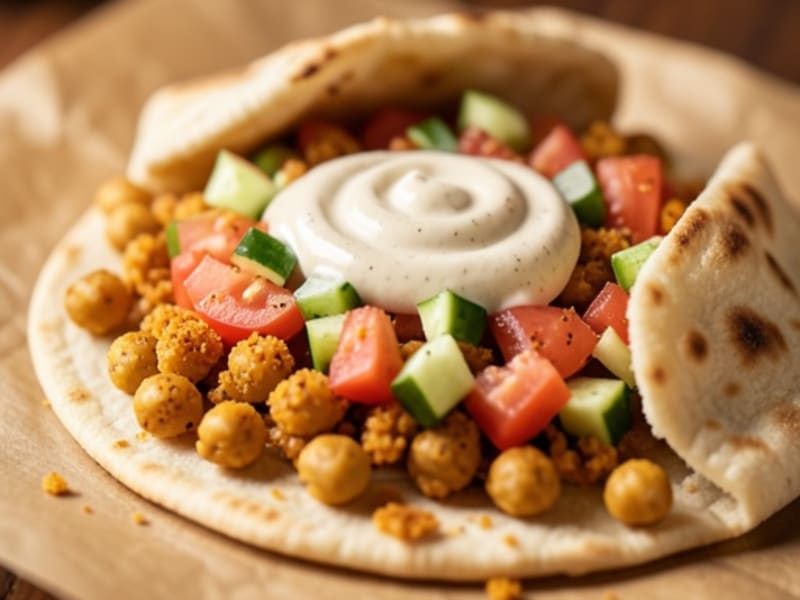
Pita Bread: A Versatile Flatbread
Pita bread. Simple yet so flexible in its uses. This much-loved leavened flatbread made primarily from wheat flour is known for that magical pocket inside. You know, the one that forms when steam works its wonders as it's baked at those scorching temperatures. Widely found across the Middle East, Mediterranean, and parts of North Africa, pita isn't just bread, it's a tool! Tear it apart, fill it up with all kinds of goodies or use it for scooping, your choice. Its soft texture pairs with a hint of sweetness and yeastiness, making it fit perfectly into kitchens around the globe.
Where It All Began
Imagine pita's roots stretching back thousands of years. We’re talking ancient Mesopotamia here; this makes it one of the oldest breads kicking around. Think early folks baking flatbreads on sizzling stones or primitive ovens, a far cry from your kitchen oven today! Over time, as we humans got fancy with baking, what we now call pita became a go-to staple in Middle Eastern meals. And get this, the word "pita" probably comes from Greek, meaning "flatbread," which underscores how many cultures have embraced and tweaked it over time.
So Many Ways to Enjoy It
Here's where things get fun: cooking with pita is like having a blank canvas. You've got your classics, stuffing that pocket full of savory falafel or juicy gyros, but really, don't stop there! Rip off pieces to scoop up hummus or baba ghanoush; you're in flavor town. Toast 'em up into chips? Absolutely. Maybe use them as pizza bases if you're feeling adventurous, or even bake into crunchy crackers for snack time. The options are pretty endless; why not see where your taste buds take you?
Why They're Good For You
If we're talking nutrition, pita bread can actually bring quite a bit to the table, especially whole wheat versions packed with complex carbs and fiber (great for digestion!). Go for whole grain and you'll snag extra B vitamins and minerals too. Sure, plain white pitas aren't quite as rich nutrient-wise but still useful on busy days when carbs call! Just keep an eye out, what you put inside plays a huge part in making it nutritious...or not.
How to Keep Them Fresh
Buying pitas? Aim for ones that feel soft, not stiff or dry, with plenty of time left before they expire. For keeping them fresh at home? Store 'em tight in an airtight bag on your counter, simple enough for several days' enjoyment right there! But wanna keep some handy down the line? Pop those bad boys into the freezer, they'll stay good months longer without losing their texture charm after thawing out again later (just don’t zap 'em too hot).
Related Words To Know
You’ll come across terms like flatbread and pocket bread, some folks call them Lebanese or Syrian breads too depending on locale nuances such as flour type variations size shapes…and these little things matter since regional flair adds delicious quirks everywhere you look!
So there’s more than meets first glance when talking about humble old-school-Pita-bread, and hopefully now you've got newfound insights ready whenever hunger strikes next!